Bluesis’s Dual Patents Lead Innovation in Seaweed Extraction Technology, Unlocking New Growth Potential in Agriculture with Alginate Oligosaccharides
08 - Dec - 2025 By: BLUESIS


From the combined physical-biological method to alginate oligosaccharide extraction, Bluesis is providing more efficient and environmentally friendly biostimulant solutions for Chinese agriculture through continuous technological innovation.
Recently, Bluesis announced that it has officially received the patent certificate for Alginate Oligosaccharide Extraction Method (authorized February 13, 2024) issued by the National Intellectual Property Administration. This marks another significant breakthrough in the field of seaweed extraction technology following the company's earlier patent for Production of Agricultural Seaweed Extract by Combined Physical-Biological Method obtained in December 2021.
The acquisition of these two patents signifies that Bluesis has established a leading technological barrier in the research, development, and application of seaweed-based biostimulants, providing new technical support for China's green agricultural development and fertilizer efficiency enhancement.
Technological Breakthrough: Dual Patents Build Core Competitiveness
Bluesis’s R&D team has consistently focused on innovating extraction technologies for seaweed active substances.
The combined physical-biological method patent obtained in December 2021 successfully addressed industry challenges such as the susceptibility of traditional seaweed extracts to spoilage and the difficulty in long-term preservation of active components by integrating physical cell disruption with enzymatic hydrolysis.
This method involves first crushing dried seaweed to 40-80 mesh, mixing it with specific activity-preserving agents, performing cell wall disruption via physical means like high-pressure homogenization or ultrasound, followed by enzymatic hydrolysis using alginate lyase at 35-55°C for 4-8 hours.
According to the R&D lead, this combined extraction method not only improves the extraction efficiency of seaweed active substances but also ensures the natural activity of plant growth regulator-like substances, resulting in a final product that performs better in promoting plant growth and regulating soil ecology.
The newly acquired alginate oligosaccharide extraction method patent further enhances the added value of seaweed extracts. Alginate oligosaccharides are degradation products of alginate, characterized by low molecular weight and high water solubility.
This technology, by optimizing the conditions for using alginate lyase and subsequent purification processes, enables the production of alginate oligosaccharide products with higher purity and stronger activity, providing high-quality raw materials for developing efficient agricultural inputs.
Product Efficacy: The Multidimensional Application Value of Alginate Oligosaccharides
Enhancing crop stress resistance is one of the core values of alginate oligosaccharides. Research indicates that alginate oligosaccharides can act as plant immunity elicitors, activating the plant's defense system and improving its resistance to abiotic stresses such as drought, low temperature, and high salinity.
In practical applications, crops treated with alginate oligosaccharides demonstrate stronger survival ability and yield stability under adverse conditions.
In terms of promoting plant growth, alginate oligosaccharides can stimulate the synthesis and metabolism of endogenous plant hormones, promoting root development and nutrient uptake, thereby leading to more robust crop growth.
Field trial data show that after using water-soluble fertilizers containing alginate oligosaccharides, crop leaf chlorophyll content increases, photosynthetic efficiency improves, and yield increases by an average of over 15%.
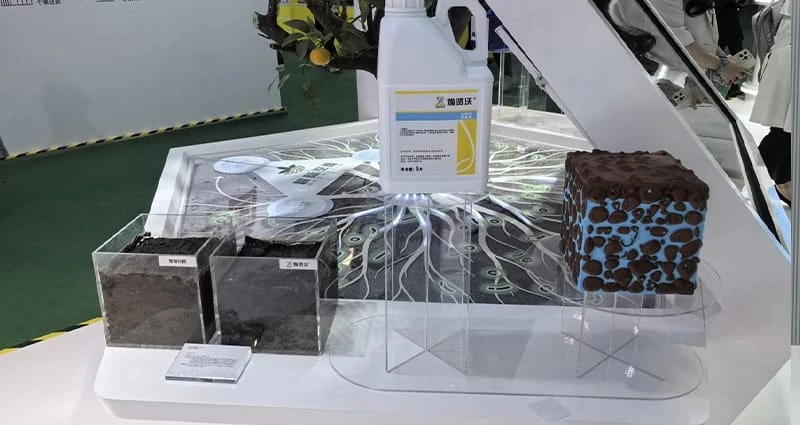
Alginate oligosaccharides also function to improve the soil microecology. Their molecular structural features can serve as a carbon source for beneficial microorganisms, promoting the proliferation of beneficial bacterial communities in the soil and inhibiting the growth of soil-borne pathogens, thereby creating a healthier rhizosphere environment.
Furthermore, alginate oligosaccharides exhibit good compatibility and miscibility, allowing them to be formulated with various fertilizers and pesticides, opening broad possibilities for developing functional specialty fertilizers.
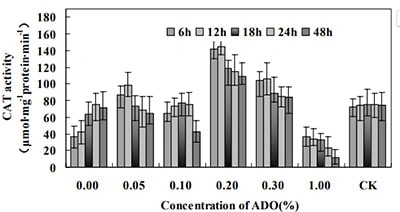
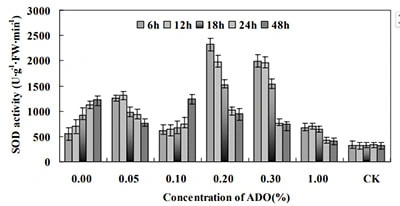
Tobacco was treated with 0.05% to 1.00% alginate oligosaccharides, followed by low-temperature stress. It was found that 0.20% alginate oligosaccharide treatment increased CAT (catalase) activity by approximately 70% and SOD (superoxide dismutase) activity by over 3 times.
R&D System: Professional Team Drives Technological Innovation
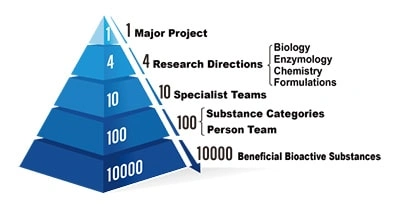
Over the years, Bluesis has built a cross-disciplinary R&D team covering fields such as biotechnology, plant nutrition, and soil science, providing talent support for the continuous innovation of seaweed extraction technologies.
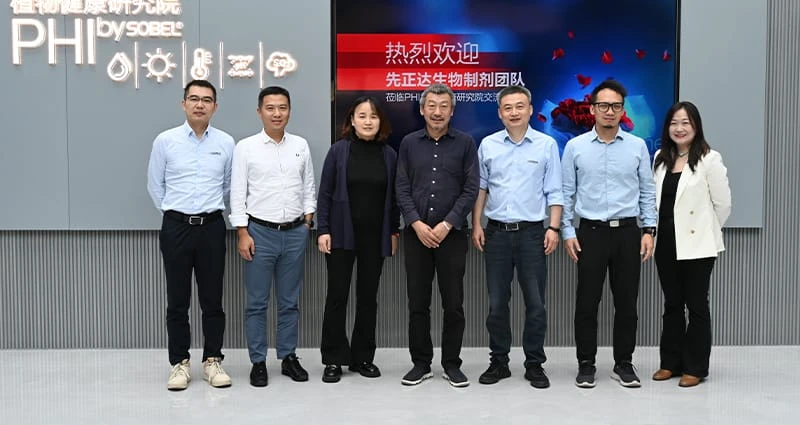
The team leader stated that the company consistently adheres to a development path combining technological innovation with industry-academia-research collaboration. It has not only established an internal R&D platform but also formed strategic or research partnerships with multiple scientific research institutions and renowned universities.
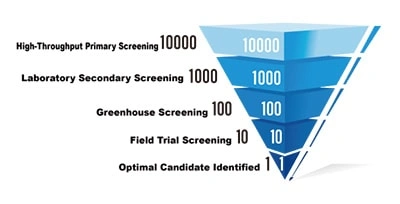
Regarding R&D investment, the company allocates a significant proportion of its annual sales revenue to technological R&D. It is equipped with advanced laboratory equipment and testing instruments, enabling it to conduct full-process R&D work from active substance screening and efficacy verification to product application.
"The successful R&D of a single product requires dozens of relevant researchers, three to five years of time, screening through thousands of tests, and an investment of over 20 million yuan in R&D funds before it can be launched to the market," the team lead emphasized.
It is this emphasis on and investment in R&D that has enabled Bluesis to continuously achieve breakthroughs in the field of seaweed biostimulants, forming a series of core technologies with independent intellectual property rights.
With the industrialization of the two patented technologies, seaweed extracts are set to play an increasingly important role in the development of green agriculture.